Building in public

Sagi AI Engineer

I build AI agent systems — autonomous agents with real guardrails, and tooling that makes Claude Code project-specific instead of templated.

AI-native.
Building in public.

I build agent systems with Claude Code daily — not just write about them. Self-taught, based in Israel, learning in public. Right now that's Verdoc, a documentation business run by an autonomous agent inside real guardrails, and claude-harness-bootstrap, a plugin that builds a project-specific Claude Code harness from a one-paragraph description.

Before that: Gymion, a production fitness PWA with real-time sync, offline support, and full multi-language RTL/LTR support — still live today. Learning by building, in public.

Claude Code Model Context Protocol TypeScript React Supabase Node.js

Things I've built

Open source In Anthropic's plugin directory

claude-harness-bootstrap

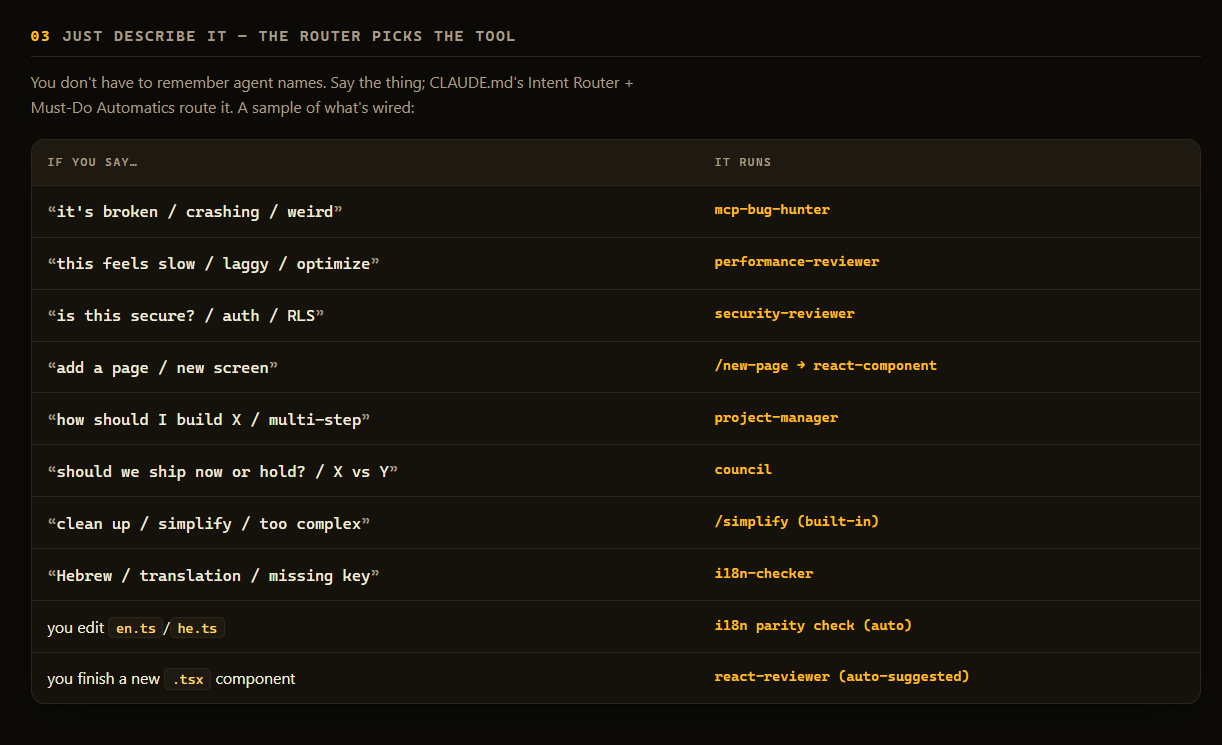
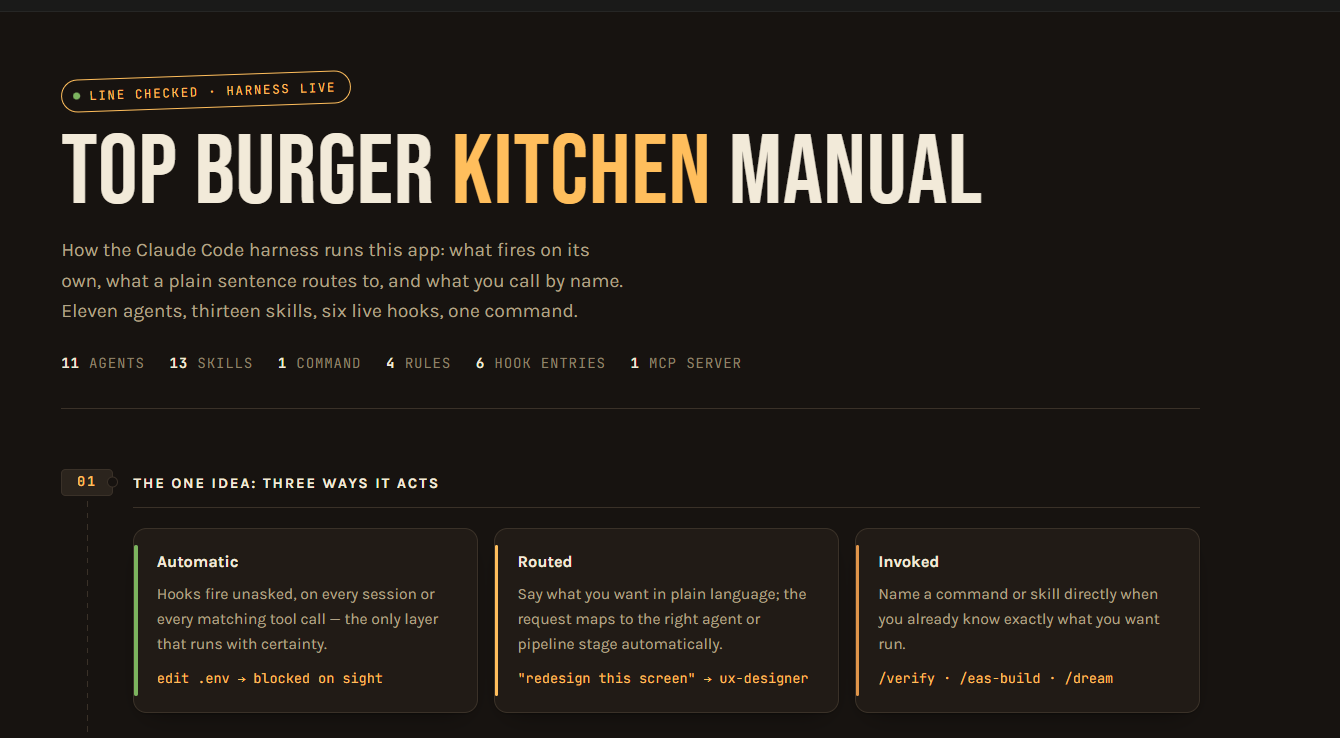
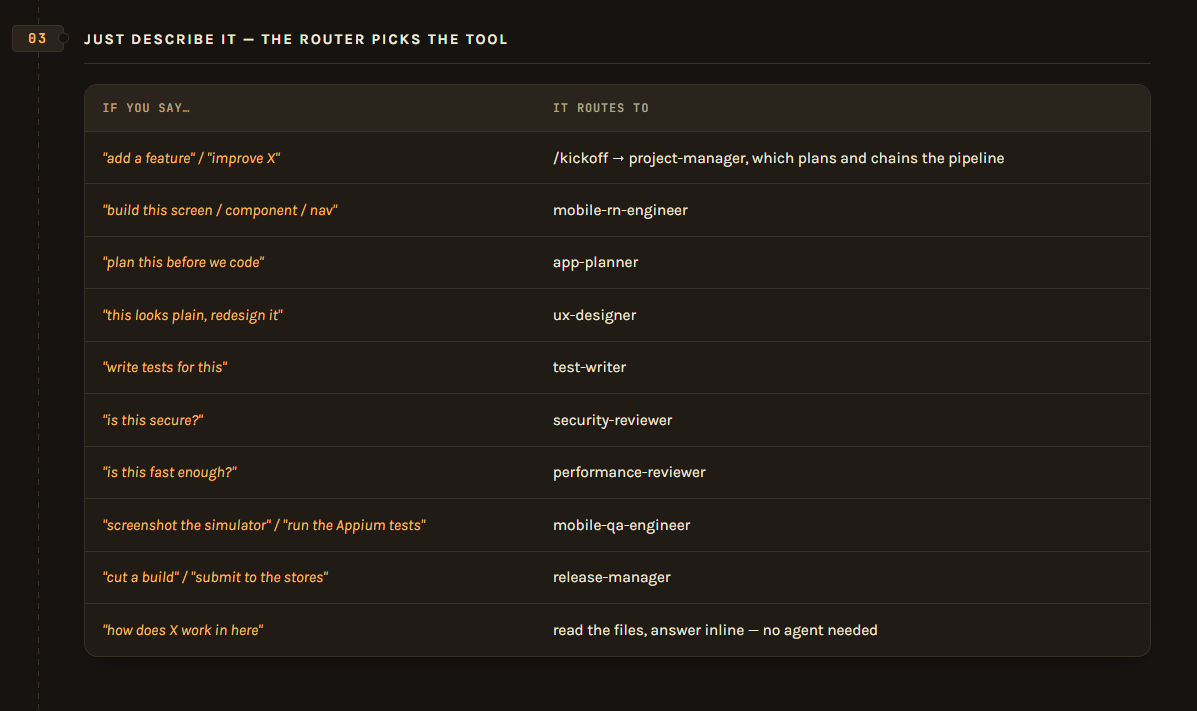
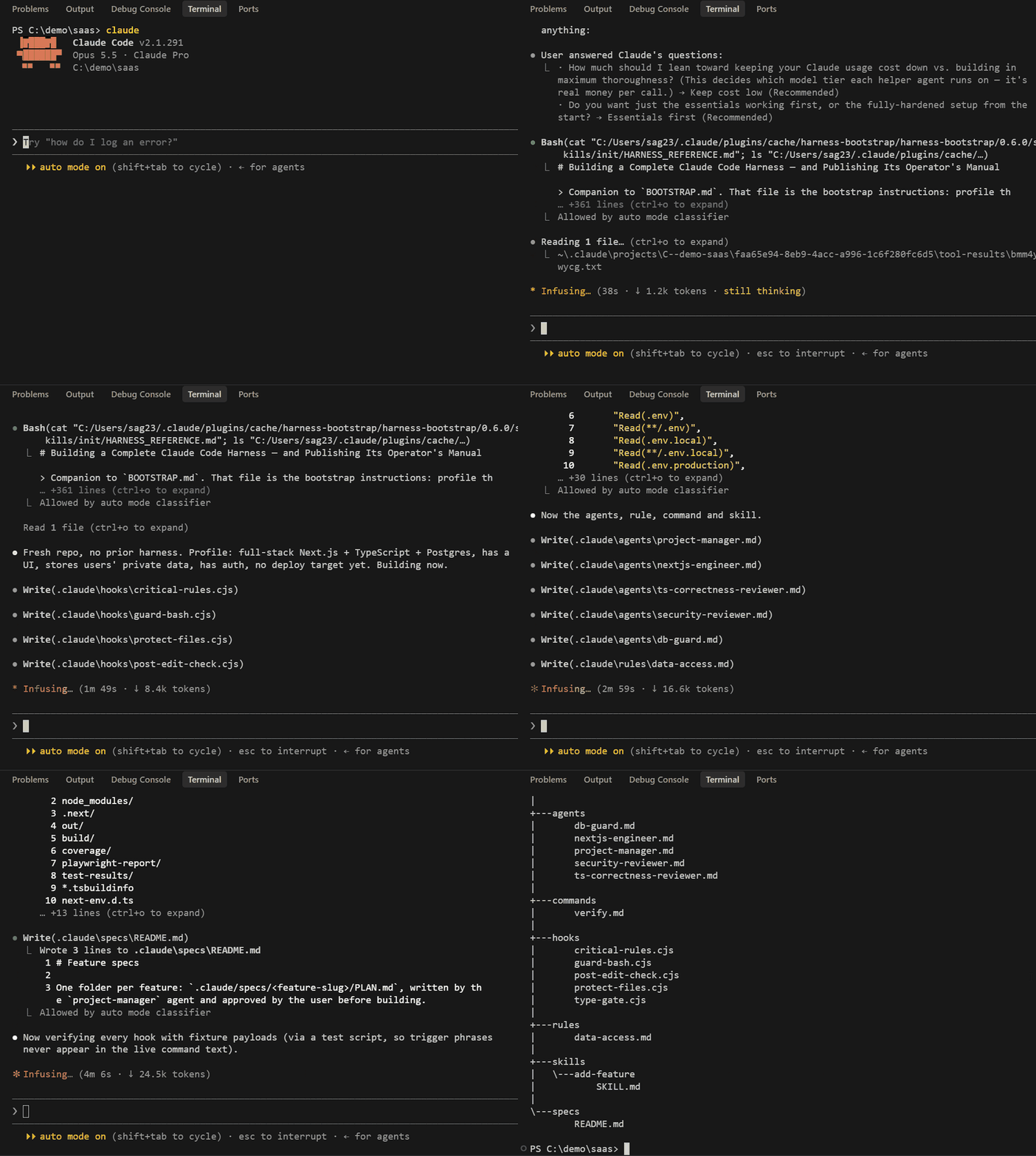
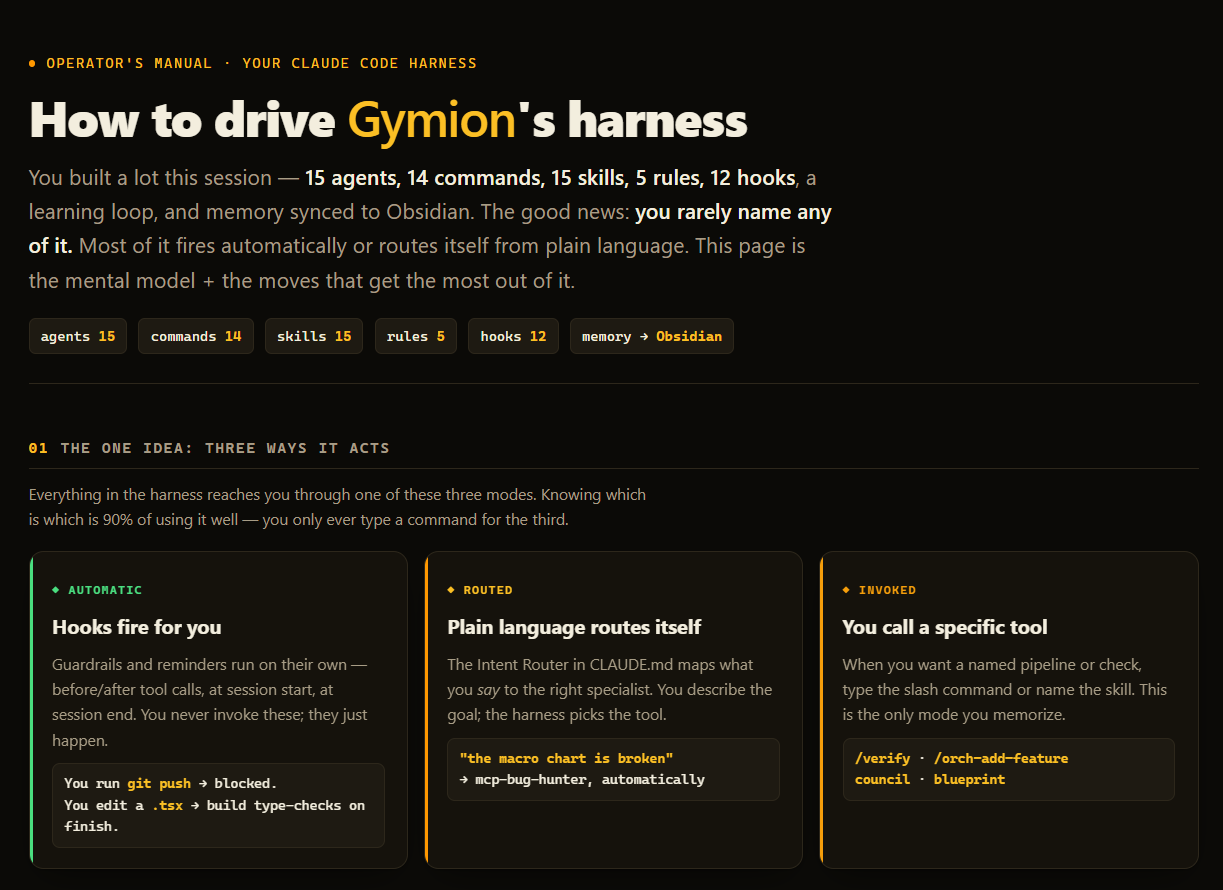
A Claude Code plugin that builds a complete, project-specific Claude Code harness — agents, guard hooks, and commands — from a one-paragraph project description. No Claude Code experience required. Agents and hooks are derived from the project's actual traits, not a fixed template: a UI gets a framework reviewer, persistence gets a data-layer guard, auth gets a security reviewer, a published library gets a semver reviewer. Every harness gets a security baseline: it protects its own files, treats outside text as data, not instructions, and turns on Claude Code's sandbox where available.

Tested two ways: evals run per model (9 of 12 on Haiku and Sonnet), and a 13-case attack suite, where its harnesses went from catching 2 cases to all 13.
Claude Code Agent Tooling Automation CLI Dev Tools Security
Demo: one project paragraph in, two setup questions, a complete .claude/ harness out Operator's Manual generated for Gymion's harness — agent, hook, and skill counts Gymion harness Intent Router mapping plain-language requests to specialist agents Operator's Manual generated for Top Burger's harness — mobile-specific agent counts Top Burger harness Intent Router routing to mobile-rn-engineer, release-manager, and other mobile-specific agents
Autonomous agent Private beta

Verdoc

A documentation business run entirely by an autonomous AI agent, governed by a constitution the agent can't edit itself. Four independent guardrail layers — immutable constitution, pre-commit hook, integrity checker, approval queue — deliberately red-teamed: four attacks attempted, four stopped. Payment runs on live agent-to-agent infrastructure (x402, on Base mainnet).

AI Agents Guardrail Architecture x402 Base Red-teamed
Live project

Gymion

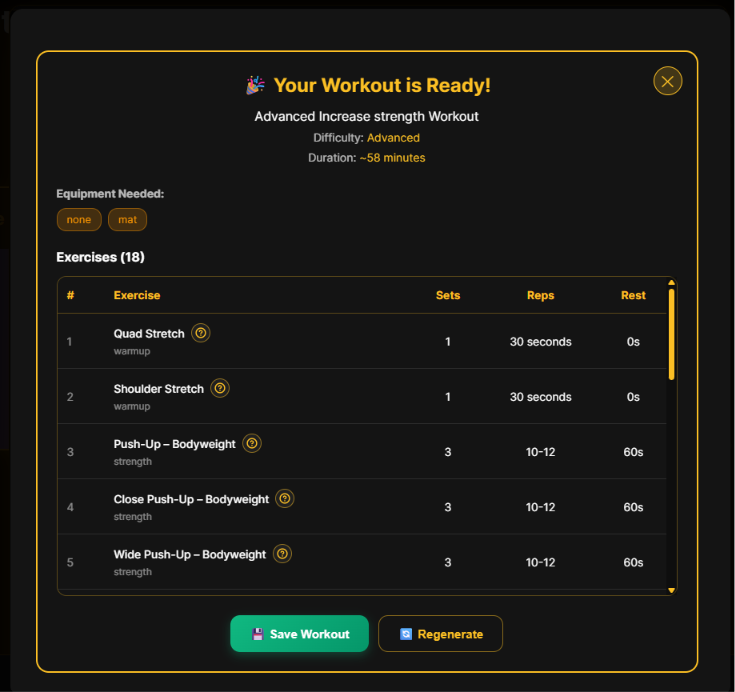
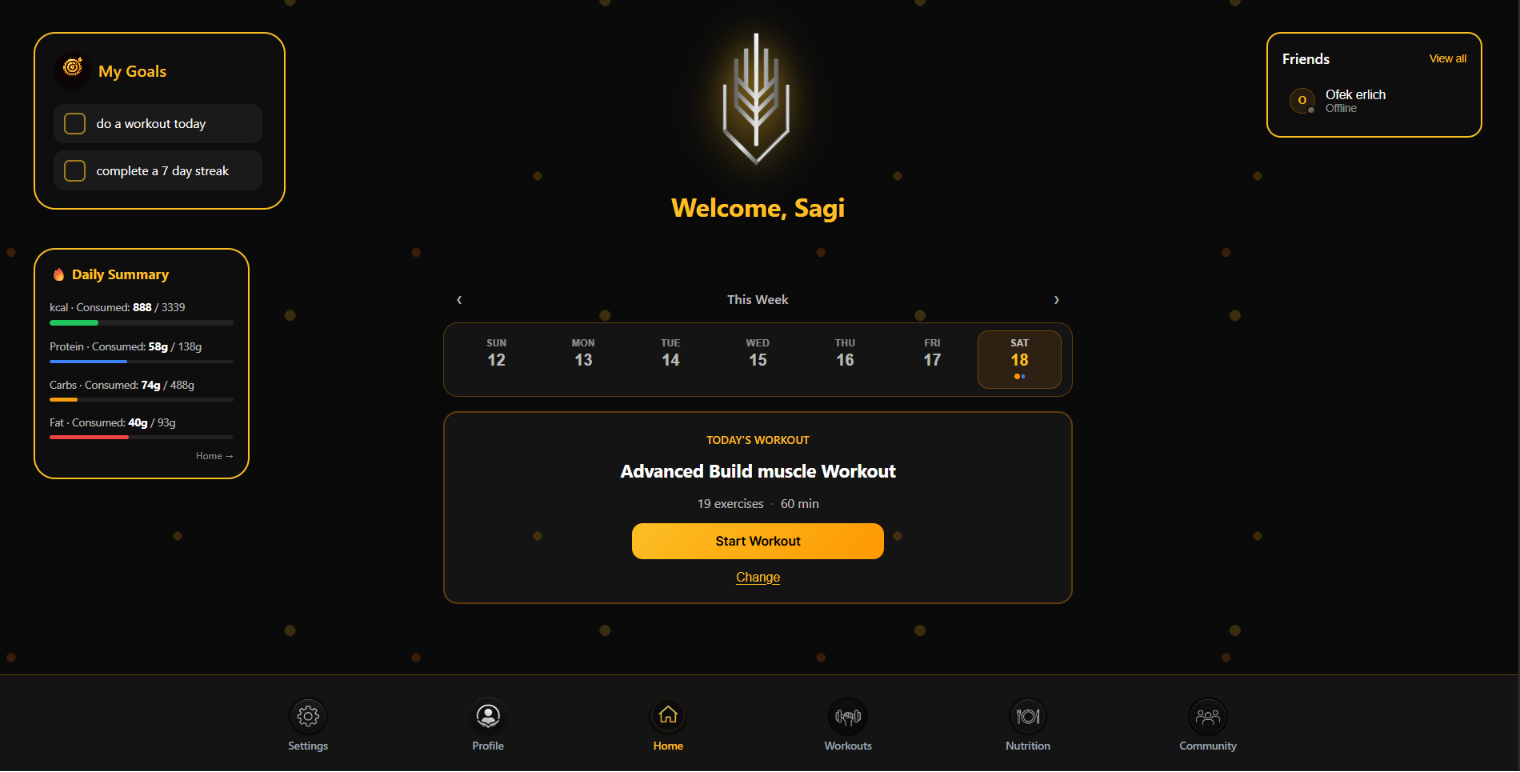
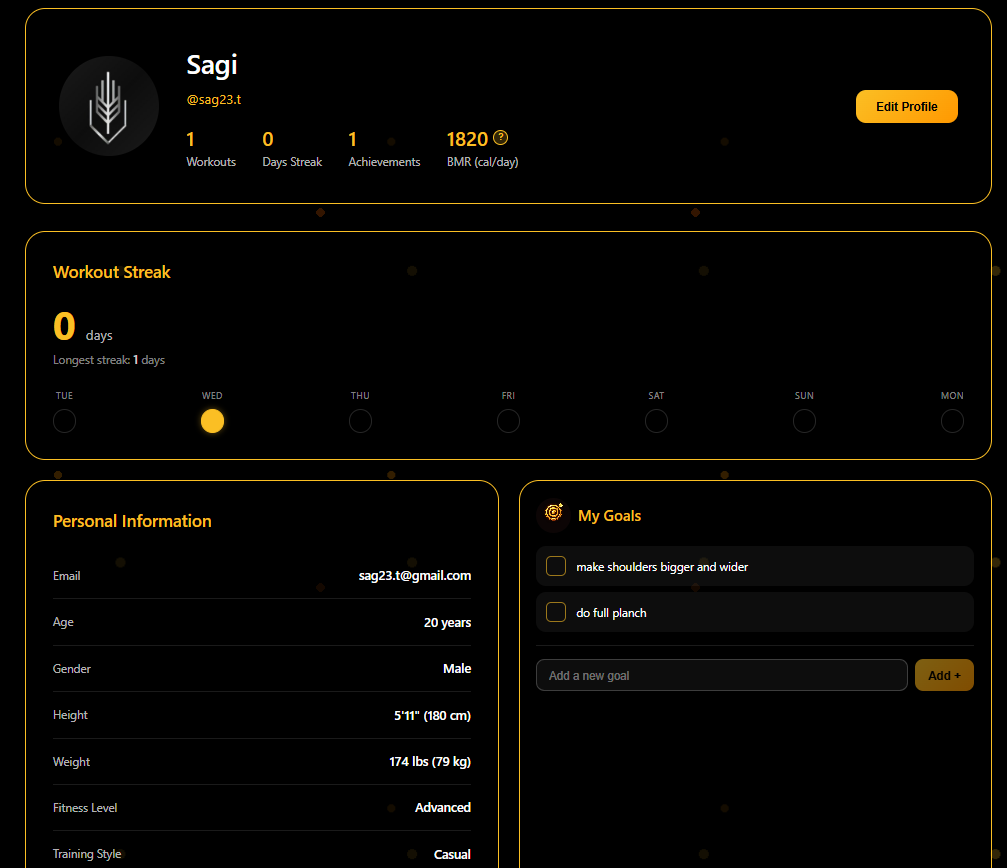
A production fitness-tracking PWA — real-time cloud sync, offline support, full RTL/LTR multi-language support, Supabase auth, an AI workout generator, and a USDA nutrition API integration. Built from scratch, live today.
Key technical decisions
Offline-first, not offline-fallback Data saves to local storage first, then syncs to Supabase in the background — a deliberate architecture choice made up front, not a fallback bolted on later.
Three-layer AI fallback chain Gemini 2.5 Flash (server-proxied) → WebLLM in-browser → a deterministic algorithm. A missing or failed AI call never breaks workout generation.
React TypeScript Supabase PWA AI Framer Motion Three.js Vercel
Visit gymion.fit →
Gymion home screen Gymion profile page Gymion AI-generated workout
Live project

Top Burger

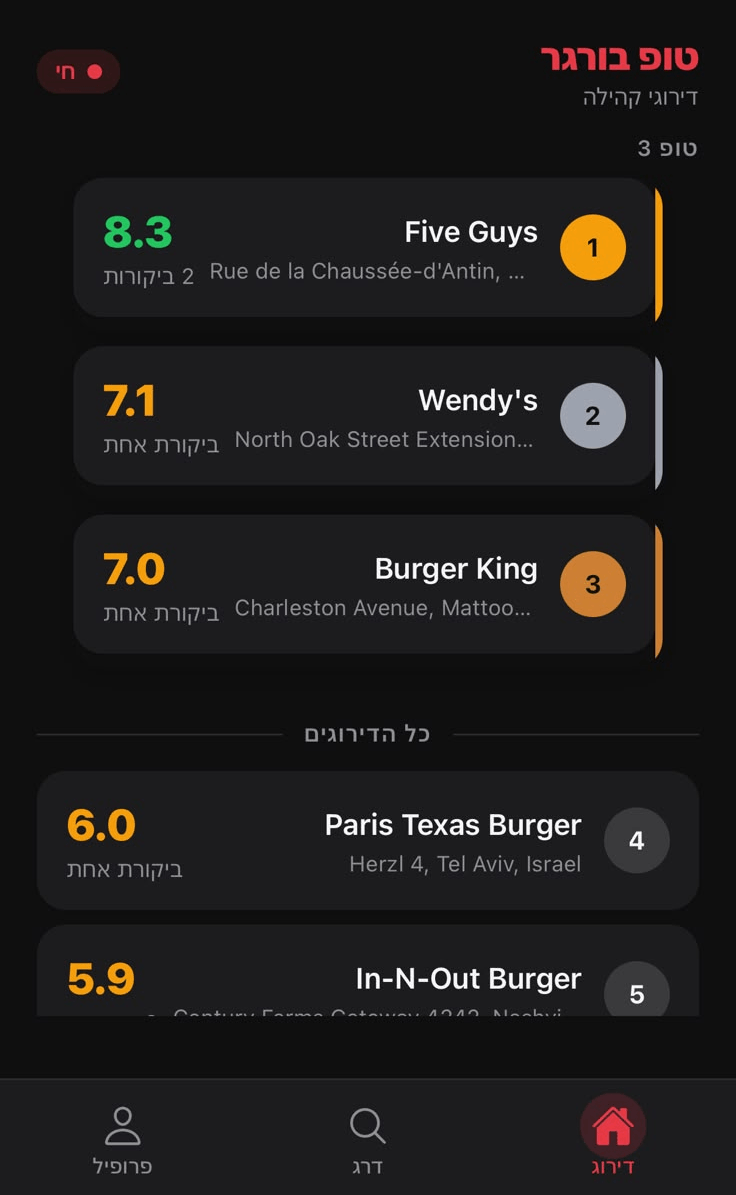
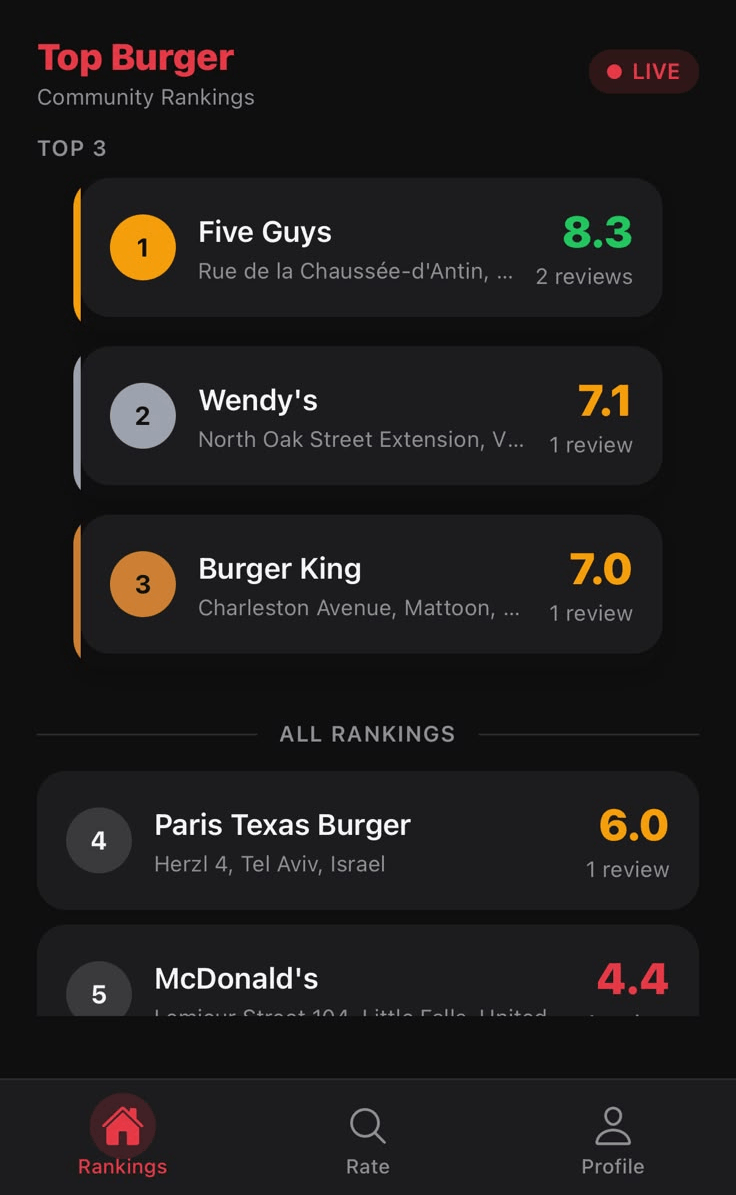
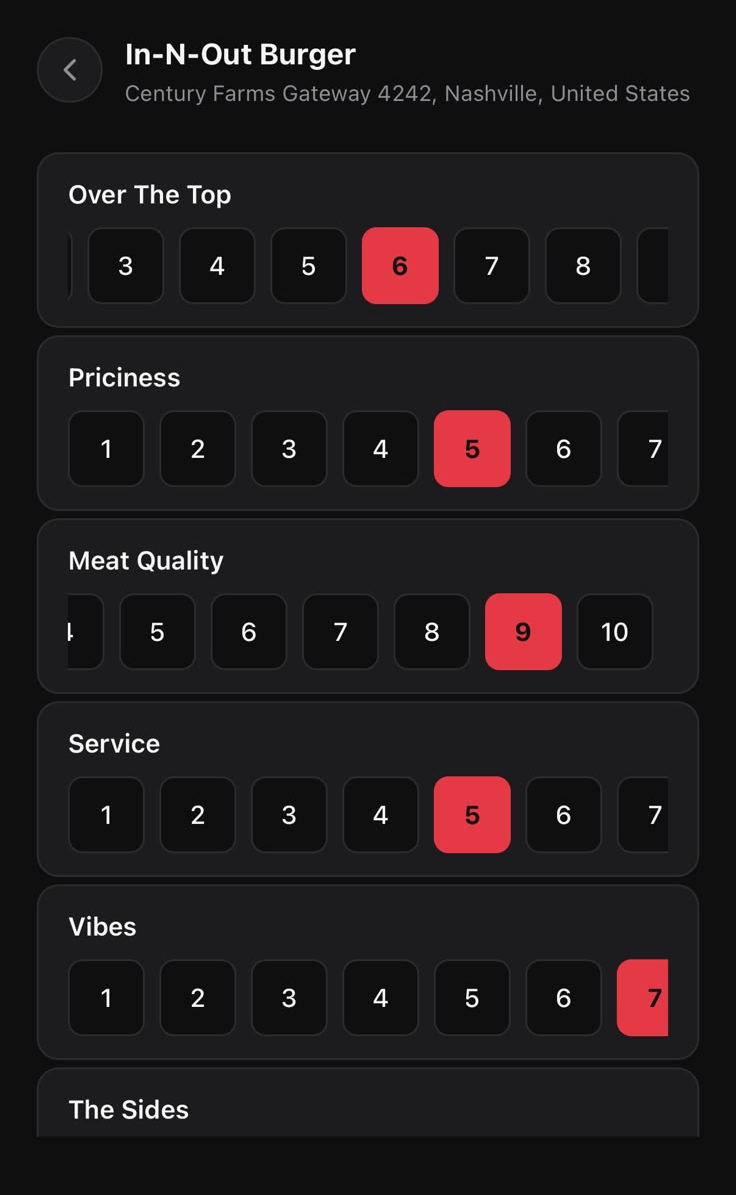
A community-driven restaurant rating app built with React Native + Expo. Users find restaurants globally, rate them across 7 categories, tag dining companions, and compete on a real-time leaderboard. Restaurant search runs on OpenStreetMap — no API key required. Full English/Hebrew i18n.
Key technical decisions
Photon over Google Places Restaurant search runs on Photon, an OpenStreetMap-based geocoder — chosen specifically because it's free and needs no API key, unlike Google Places.
Cloudinary over Firebase Storage Photo uploads go through Cloudinary instead of Firebase Storage, because Firebase Storage requires the paid Blaze plan.
Security rules with per-field checks, tested in CI Firestore security rules allow each write only for its purpose in the app, checking known fields, score bounds and every aggregate update. An emulator test suite covers both the real write paths and the abuse cases, and runs in CI.
React Native Expo Firebase OpenStreetMap NativeWind i18n
Top Burger live leaderboard Top Burger 7-category rating flow Top Burger restaurant page with all its reviews Top Burger in Hebrew with a right-to-left layout

Notes from building

Let's build something.

Open to AI engineering roles and freelance work on agent systems. Also happy to just talk shop about agents — I read everything.